Presentation

What AI Can't Do for Us

How to train developers in the age of AI agents

  • The bottleneck
  • Cognitive debt
  • Intent debt
  • Domain knowledge
  • Reading well

Facundo Uferer

Use the ← β†’ arrow keys or the buttons to move forward.

Concept 1 of 5

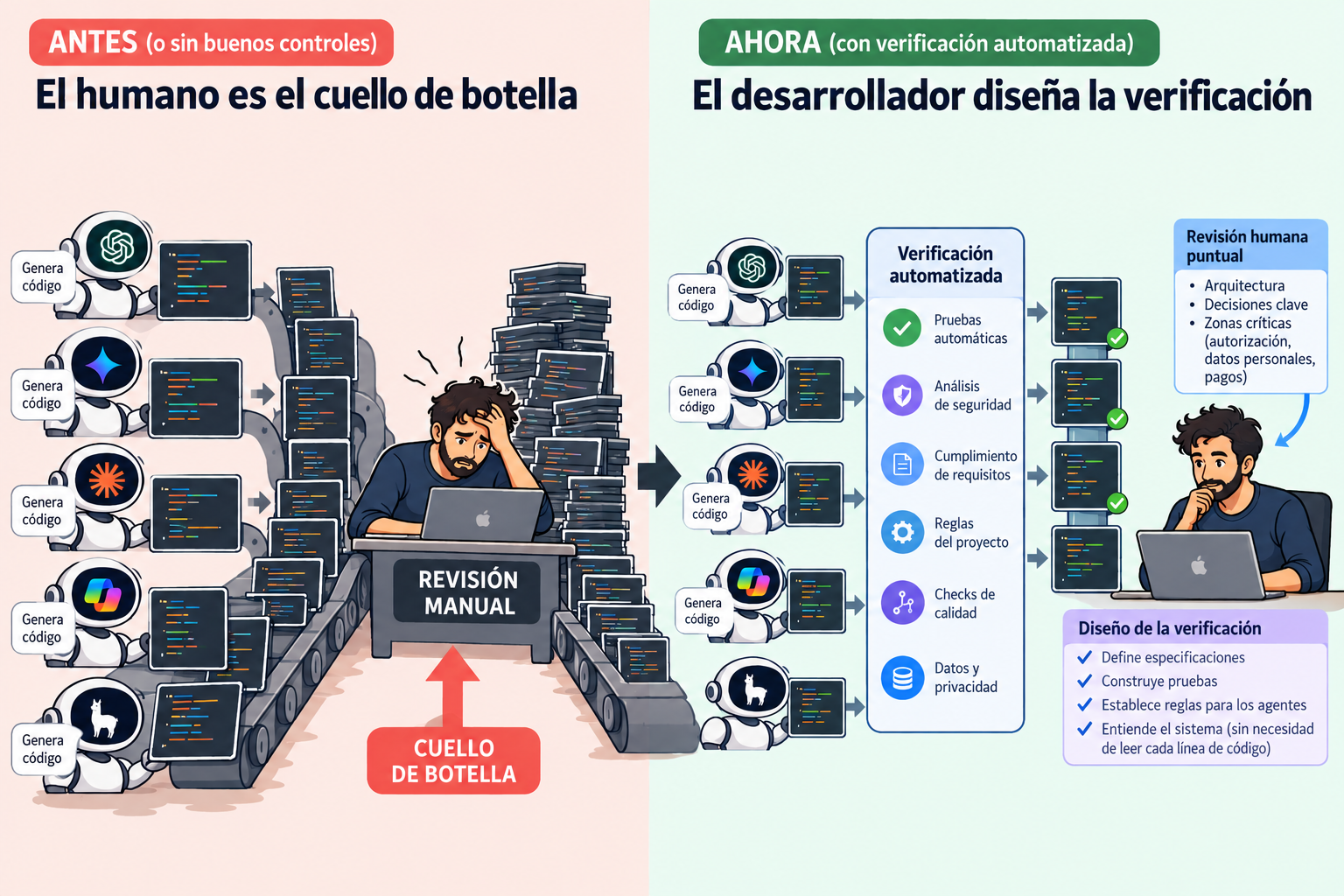
The bottleneck

Comparative infographic. Before: several AI agents generate code that piles up in front of a developer overwhelmed by manual review, the bottleneck. Now: code goes through automated verification (tests, security analysis, requirements, project rules, quality checks, data and privacy) and the developer designs that verification and only reviews architecture, key decisions, and critical areas.
Concept 2 of 5

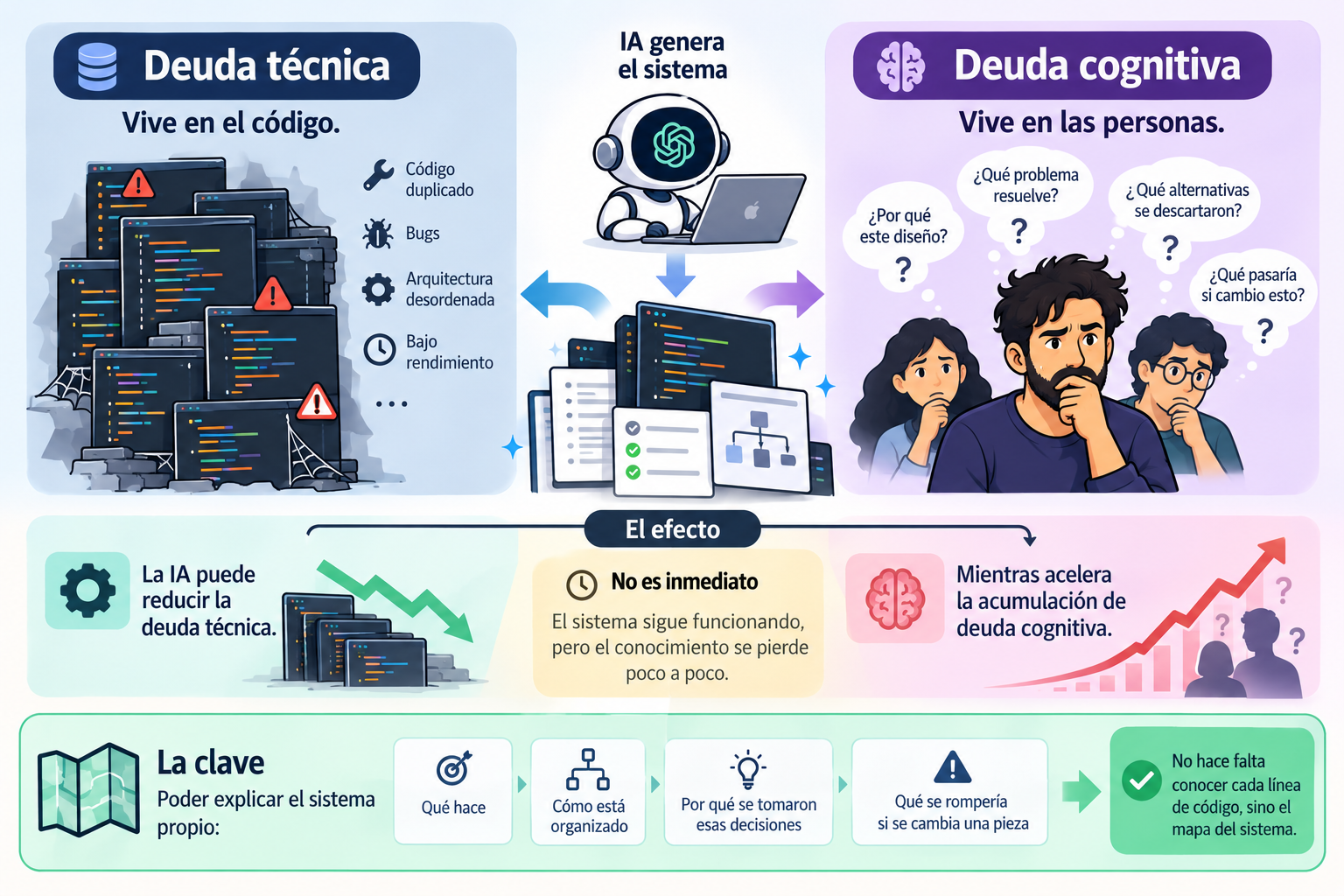
Cognitive debt

Infographic contrasting technical debt, which lives in the code, with cognitive debt, which lives in people who no longer know why the system is the way it is. AI can reduce technical debt while accelerating cognitive debt; the key is being able to explain what the system does, how it is organized, why, and what would break if a piece changed.
Concept 3 of 5

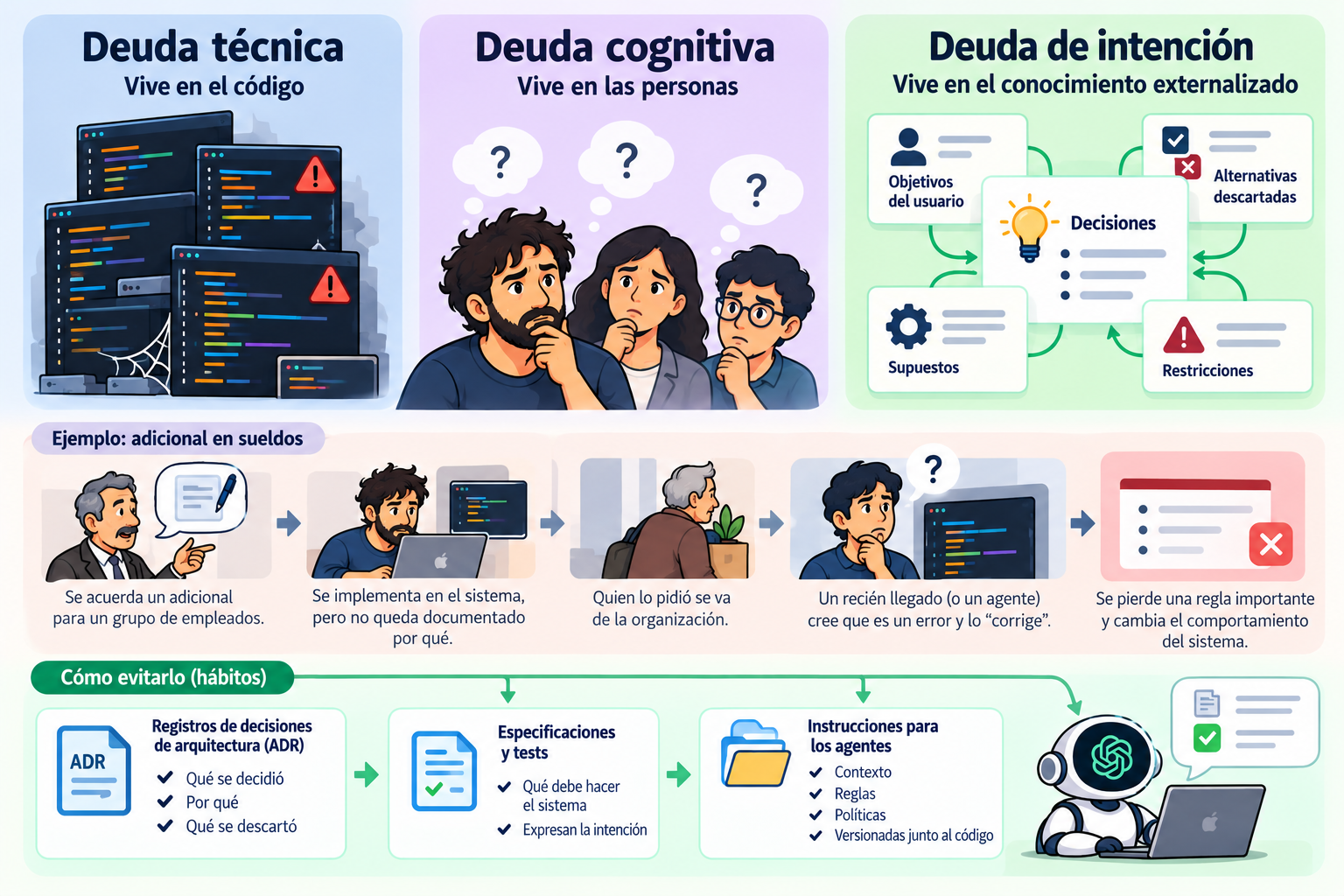
Intent debt

Infographic on intent debt, which lives in externalized knowledge: user goals, discarded alternatives, assumptions, and constraints. It shows the example of an undocumented payroll bonus that a newcomer "fixes", and the habits that prevent it: architecture decision records (ADRs), specifications and tests, and agent instructions versioned alongside the code.
Concept 4 of 5

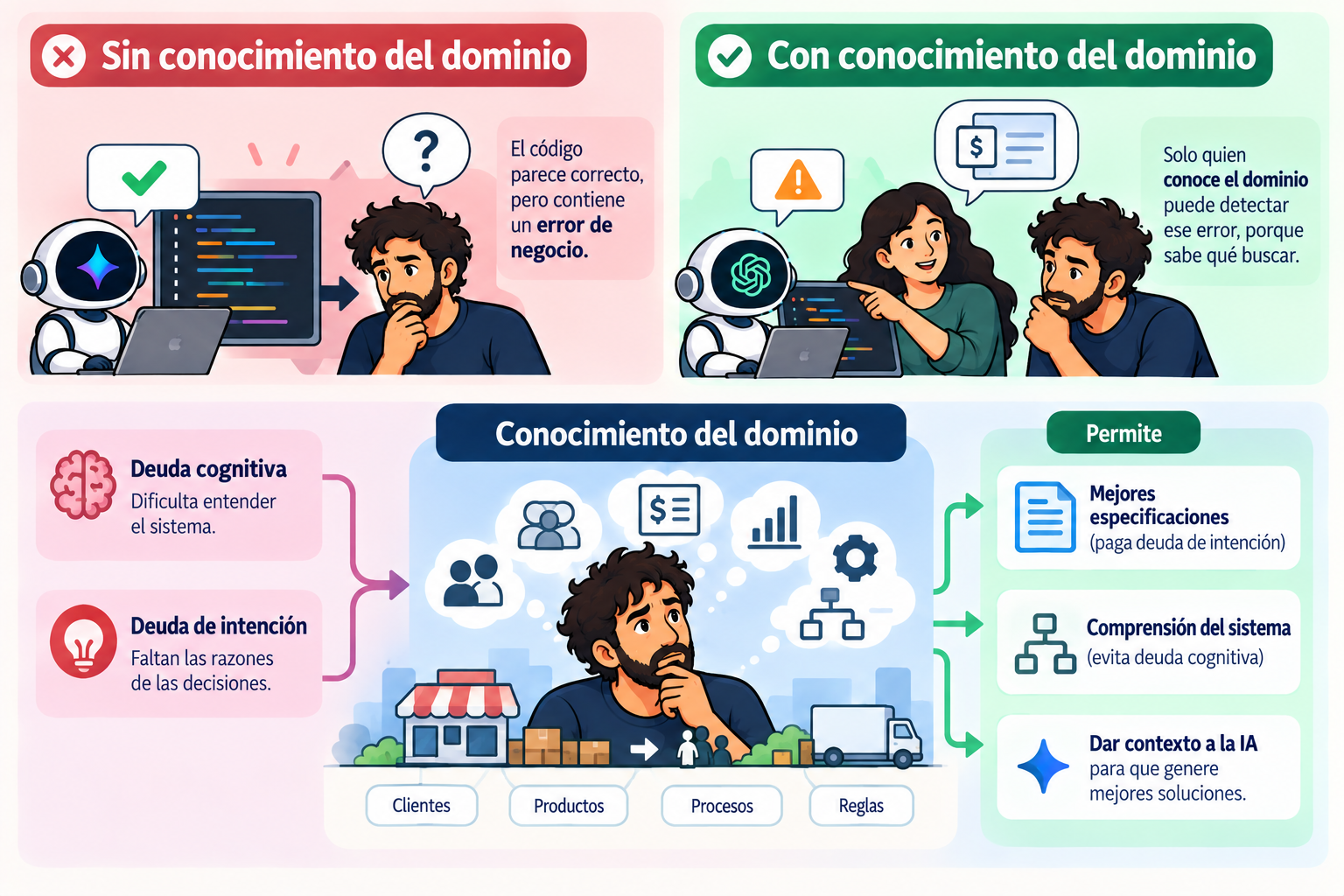
Domain knowledge

Infographic on domain knowledge. Without it, the AI code looks correct but contains a business error; with it, someone who knows the domain spots the error because they know what to look for. That knowledge of customers, products, processes, and rules enables better specifications, system understanding, and giving AI context.
Concept 5 of 5

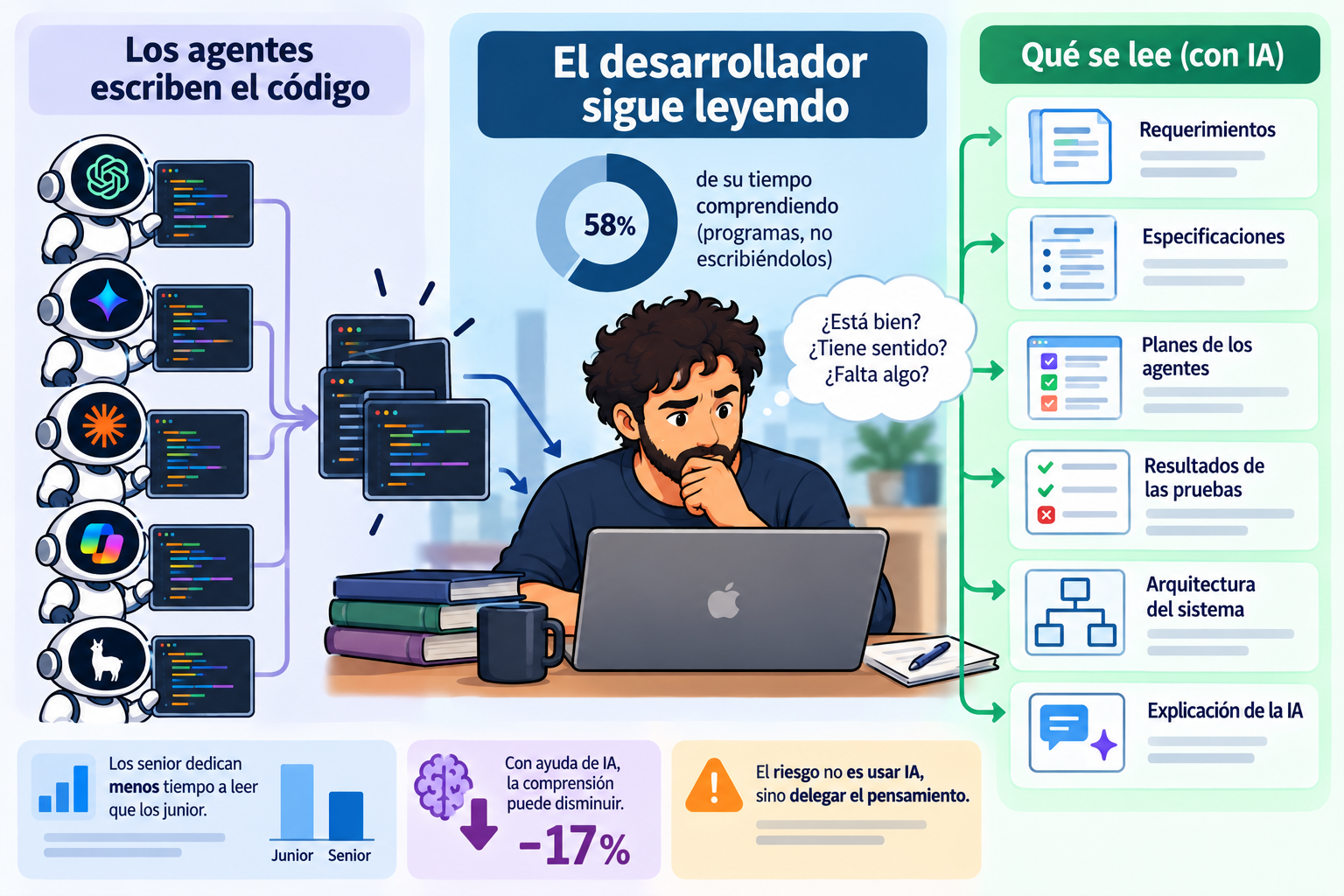
Reading well

Infographic on reading well: agents write the code and the developer keeps reading, spending 58% of their time comprehending programs. With AI, people read requirements, specifications, agents' plans, test results, the system architecture, and the AI's explanation. With AI assistance comprehension can drop 17%: the risk is not using AI, but delegating the thinking.
In short

AI works as an amplifier

It boosts what already exists, both strengths and weaknesses. A team that understands its system, records its decisions, and knows its domain will win with AI. One that does not will produce, faster, something it understands less and less.

Read the full article