 Facundo Uferer
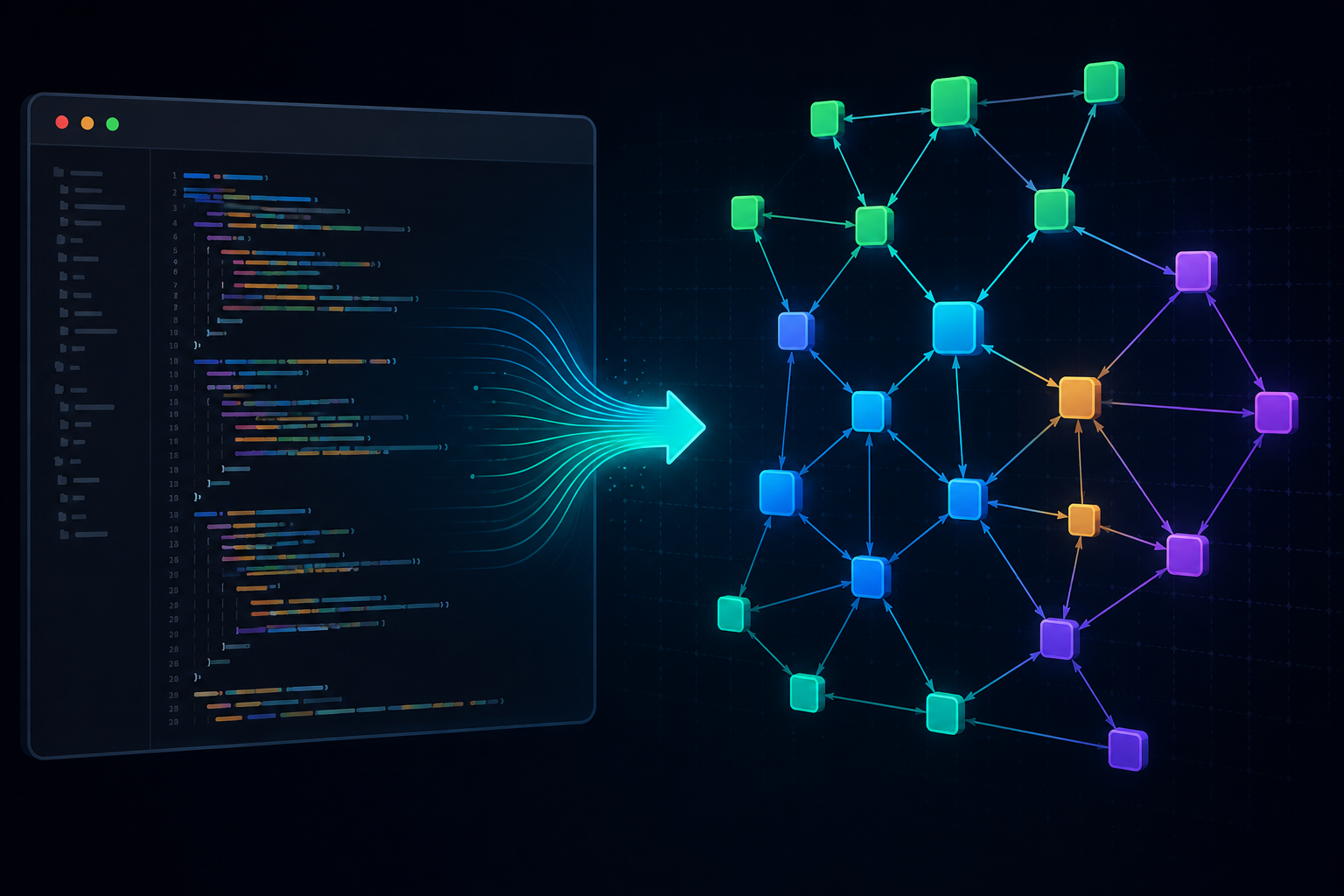
CodeGraph joins the ever-growing family of tools trying to make coding agents stop behaving like interns armed with grep. Before asking an AI to understand a repository, it helps to give it a map of the territory. That map is a local graph of symbols, calls, imports, and dependencies, which agents can then query directly.
Instead of having the agent open file after file to mentally reconstruct an architecture, it uses codegraph_explore to retrieve structural context: which function calls which, what could break when touching a symbol, and which code fragments actually matter. According to its own benchmarks, this reduces tool calls and file reads, though the actual cost savings depend on repository size and usage volume.
The project also makes a sensible decision: it runs locally. The index lives in .codegraph/, uses SQLite, and auto-updates when code changes. There is anonymous telemetry, but it is documented and can be disabled, with no code, paths, or filenames ever sent.
Its best use case is medium to large repositories, especially when multiple agents or developers need to reason about flows, change impact, or cross-cutting dependencies. It does not replace reading code, tests, or human judgment. It just keeps the AI from wasting tokens rediscovering the wheel.
Installation
# macOS / Linux
curl -fsSL https://raw.githubusercontent.com/colbymchenry/codegraph/main/install.sh | sh

# Windows PowerShell
irm https://raw.githubusercontent.com/colbymchenry/codegraph/main/install.ps1 | iex
With Node:
npm i -g @colbymchenry/codegraphConnect your agents
codegraph installThis sets up the MCP server for Claude Code, Cursor, Codex CLI, OpenCode, Hermes Agent, Gemini CLI, Antigravity IDE, and Kiro. It does not index the project yet.
Index a project
cd your-project
codegraph init
Creates .codegraph/ and generates the local index. It then auto-syncs when files change, with a 2-second debounce window.
Useful commands
codegraph status
codegraph explore "how login works"
codegraph query UserService
codegraph callers authenticate
codegraph callees authenticate
codegraph impact authenticate
codegraph affected src/auth.ts
codegraph sync
codegraph uninit
The central command is codegraph explore, equivalent to the MCP tool codegraph_explore: it returns relevant code, call paths, and potential impact radius.
Privacy and telemetry
The index lives locally in SQLite inside .codegraph/codegraph.db. Telemetry is anonymous and does not include code, paths, filenames, symbols, or queries. It can be turned off with:
codegraph telemetry offAt the time of writing, the project was at version 1.2.0, has an MIT license, and is published as a binary or npm package @colbymchenry/codegraph.