 Facundo Uferer

Scientific research in universities is undergoing one of the most profound transformations in modern history. The explosion of academic publications—with over 3 million scientific papers published annually—presents an unprecedented challenge for researchers, advisors, and university professors: how to stay at the cutting edge of knowledge while rapidly translating those discoveries into engaging classroom content for undergraduate and graduate students?
Large Language Models (LLMs) and multimodal AI systems—such as Claude (Anthropic), Gemini (Google), and ChatGPT (OpenAI)—do not replace the scientific method or empirical rigor. Instead, they act as cognitive amplifiers: accelerating systematic literature reviews, identifying research gaps, assisting exploratory data analysis, and transforming complex papers into interactive learning experiences.
In this detailed guide, we explore an end-to-end workflow for conducting university research with AI and connecting those breakthroughs directly into high-value educational material.
Model Ecosystem: Claude, Gemini, and ChatGPT in the Lab
Each major model brings distinct strengths to academic research and higher education:
| Model / Platform | Key Strengths in Research | Recommended Use Cases |
|---|---|---|
| Claude (Anthropic) | Deep reasoning over long texts, lowest hallucination rate, nuanced understanding of dense papers, and rigorous code syntax. | Critical manuscript review, data analysis scripting, methodological coherence checks, and academic writing. |
| Gemini (Google) | Massive context window (up to 2 million tokens), native multimodal integration (PDFs with figures, charts, data tables), Google Scholar integration. | Mapping entire literature corpuses, extracting data from scanned paper figures, and cross-disciplinary synthesis. |
| ChatGPT (OpenAI) | Direct Python code execution (Advanced Data Analysis), rapid case study generation, and interactive pedagogical tools. | Exploratory Data Analysis (EDA), synthetic dataset generation for classes, and structuring syllabus projects. |
Phase 1: Curating, Mapping, and Synthesizing Literature
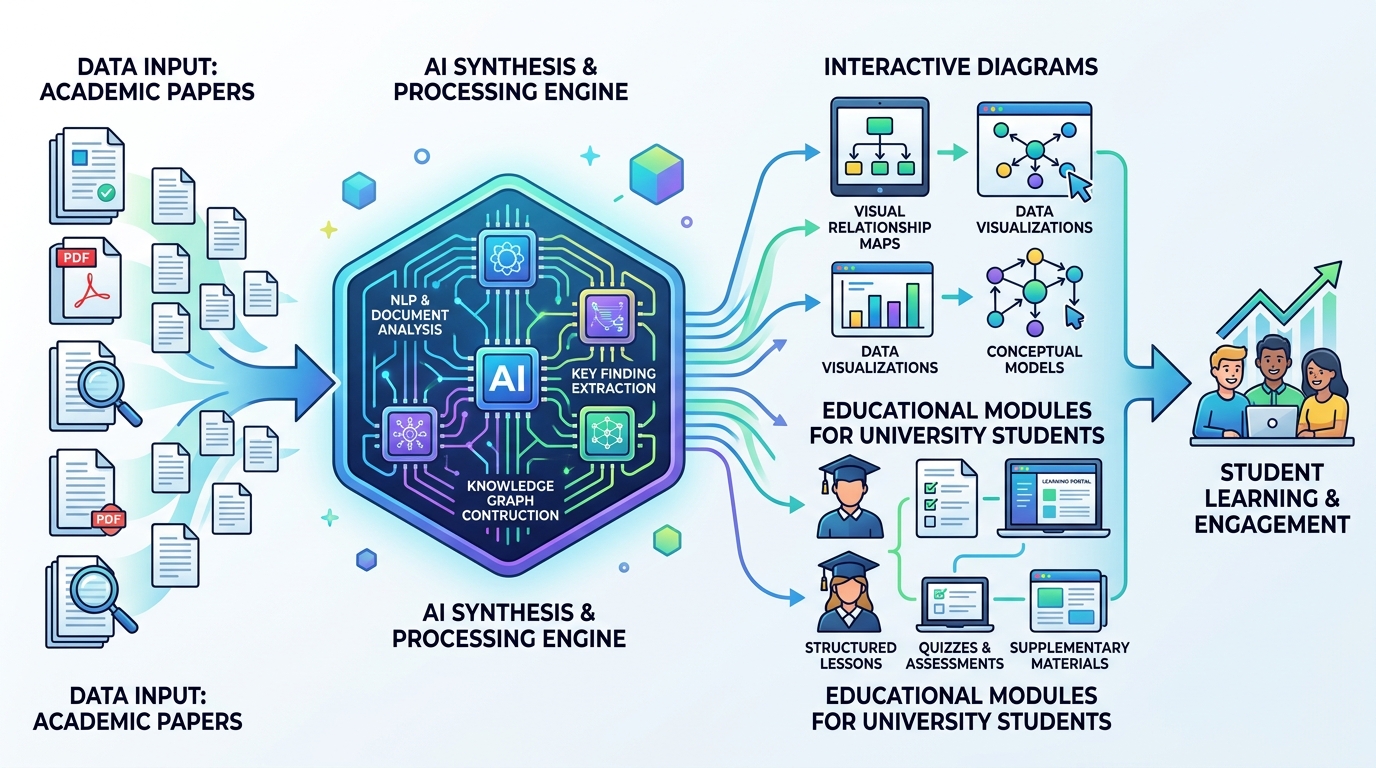
The first step in any research project—or course syllabus update—is reviewing the state of the art. Traditionally, this process consumed weeks of fragmented reading.
Mapping Research Gaps
Using models like Claude or Gemini, researchers can upload collections of papers (as PDFs or text) and request structured comparative analysis.
Act as a senior researcher and peer reviewer in [Field, e.g., Computational Neuroscience / Agricultural Economics].
I have uploaded 5 key recent papers on [Specific Topic, e.g., Convolutional Neural Networks in MRI Analysis].

Analyze the manuscripts and provide:
1. Comparative Matrix: Methodology used, sample size, author-acknowledged limitations, and main findings.
2. Contradictions & Discrepancies: Areas where study results conflict and potential methodological causes.
3. Research Gaps: Three unresolved research questions in the literature that could form the basis of a thesis or course project.
4. Tailored Technical Glossary: A summary of the 10 most complex terms explained for undergraduate students.
Scientific Rigor Rule: Never trust raw AI-generated bibliographic citations blindly without verified retrieval-augmented search (RAG). Always cross-reference DOIs, volume, issue, and author names directly against verified databases (PubMed, IEEE Xplore, Scopus, Google Scholar).
Phase 2: Hypothesis Generation and Experimental Design
Once gaps in the literature are identified, university researchers must formulate testable hypotheses and design rigorous experimental protocols.
Using AI as a Scientific “Devil’s Advocate”
One of Claude’s most powerful research applications is stress-testing experimental designs before submitting to ethics committees or grant proposals.
Act as a peer reviewer for a top-tier journal (Q1).
Review the following experimental design proposal:

[Insert hypothesis, independent/dependent variables, sample size, and methodology]

Please highlight:
1. Three threats to internal validity in this experiment.
2. Potential confounding variables not accounted for.
3. Actionable recommendations to improve protocol reproducibility.
Phase 3: From Research to the Classroom (Translational Teaching)
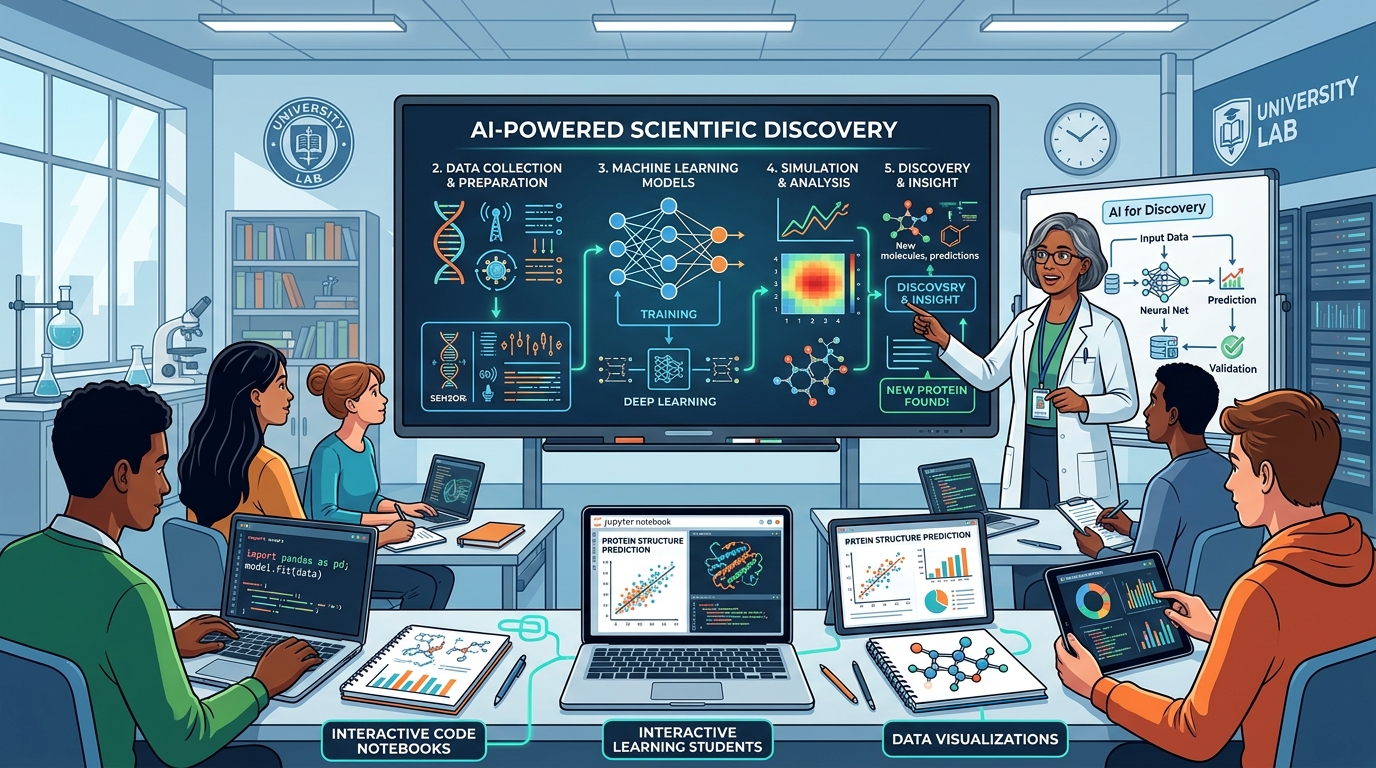
The key differentiator for university professors is bridging the gap between the research lab and the lecture hall. AI enables professors to convert cutting-edge research into rich educational materials.
1. Creating Interactive Case Studies from Real Papers
Rather than assigning dense papers for passive reading, professors can prompt Claude or ChatGPT to transform findings into scenario-based case studies:
Act as a university professor in [Subject, e.g., Biotechnology / Data Science].
I have this paper: [Paste abstract and results section].

Transform this research into a 3-part Interactive Case Study for undergraduate students:
- Part 1 (The Dilemma): Present the real-world problem without revealing the paper's final conclusions.
- Part 2 (The Data): Provide a simplified version of the data tables and ask students to formulate their own interpretation.
- Part 3 (Reflection & Debate): Pose 3 critical thinking questions on practical applications in industry or society.
2. Generating Interactive Notebooks and Synthetic Datasets
For quantitative courses (statistics, bioinformatics, economics, engineering), AI is exceptional at crafting step-by-step Python / R / Julia notebooks with pedagogical explanations.
Write an educational Jupyter Notebook in Python simulating [Model, e.g., SIR Epidemiological Model with stochastic parameters].

Requirements:
1. Clean, commented, modular code using pandas, matplotlib, and numpy.
2. Conceptual explanations in Markdown cells before each code block.
3. Three practical exercises asking students to modify parameters (e.g., reproduction number R0) and analyze graph shifts.
Ethics, Transparency, and Best Practices in AI Research
Using AI in university research requires uncompromising ethical standards:
- Disclosure: Explicitly declare in papers, theses, and grant submissions how AI tools were used (e.g., “Claude 3.5 Sonnet was utilized for code structuring and grammar refinement”).
- Data Privacy & IP: Never upload unanonymized patient data, unpatented intellectual property, or confidential lab notes into public LLM endpoints.
- Teacher & Researcher Accountability: AI suggests, synthesizes, and drafts; human researchers and professors audit, sign off, and take full scientific responsibility.
Conclusion: The Augmented Professor-Researcher
Artificial intelligence does not democratize scientific genius, but it democratizes operational and research efficiency. University professors and researchers who master Claude, Gemini, and ChatGPT will not only accelerate their lab discoveries—they will transform their classrooms into hubs of genuine scientific discovery.