 Facundo Uferer
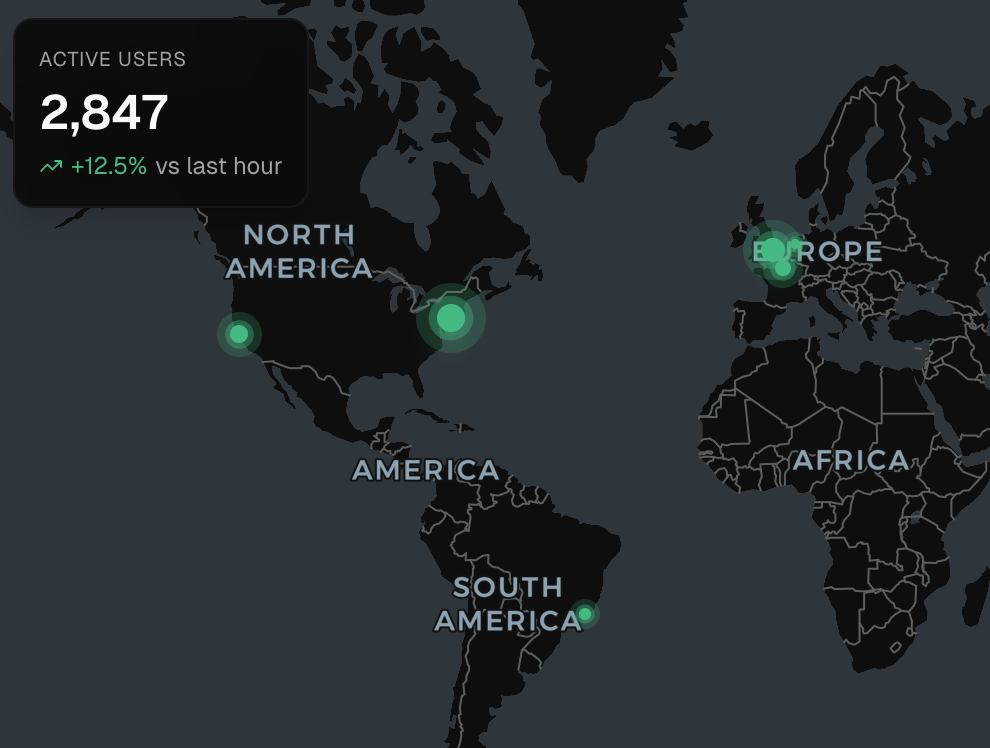
mapcn proposes something more practical: applying the shadcn/ui philosophy to the geospatial terrain. Instead of depending on a closed library, it offers copy-paste components for React that you install, add to your repo, and modify freely. The technical base uses MapLibre GL and Tailwind styles, with a simple idea: the map should be part of your product, not a separate system.
That proposal explains its rapid adoption. The project has thousands of stars on GitHub, hundreds of forks, and an active community sending issues, improvements, and ports to other frameworks. There are already versions or adaptations for Svelte, Vue, React Native, and a beta package for Angular. It doesn’t look like a marketing community with an ornamental Discord, but one of developers solving real problems.
Technically, mapcn includes support for routes, clusters, popups, tooltips, GeoJSON layers, and full viewport control. It also exposes useMap(), which lets you access the MapLibre instance and customize behaviors. This makes it especially useful for dashboards, logistics, delivery tracking, territorial analytics, or any app where the map is a central piece of the interface.
And AI? It doesn’t have “AI-native” functions, which is probably good news. Its value is in offering an open surface where a model can work without friction: transforming natural language into geographic filters, generating routes from text, creating GeoJSON automatically, detecting spatial anomalies, or summarizing what’s happening on a logistic map. Instead of selling algorithmic smoke, it leaves space to build something serious.
mapcn doesn’t try to reinvent maps. It tries to give control back to the developer. In 2026, that already sounds almost subversive.