 Facundo Uferer
The do-while statement also repeats instructions, but it has a very important difference compared to while.
In this lesson you’ll learn:
- how
do-whileworks - how it differs from
while - why it executes at least once
- when to use it
Syntax
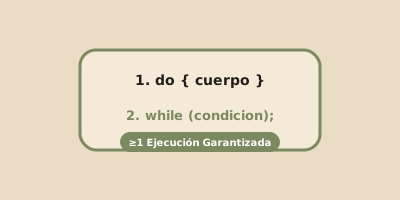
do {
    instructions;
} while (condition);
Fundamental difference from while
In while, the condition is evaluated before entering the block.
In do-while, the condition is evaluated after executing the block.
That means the block executes at least once.
Example
#include <stdio.h>

int main() {
    int i = 1;

    do {
        printf("%d\n", i);
        i = i + 1;
    } while (i <= 5);

    return 0;
}
Example where the difference matters
#include <stdio.h>

int main() {
    int numero = 10;

    do {
        printf("The number is %d\n", numero);
    } while (numero < 5);

    return 0;
}
Even though numero < 5 is false, the block executes once.
When should you use do-while?
Use it when you want the block to execute at least once before checking whether to repeat.
Common mistakes
1. Believing while and do-while are the same
They’re not. The difference is in when the condition is evaluated.
2. Forgetting the final ;
} while (condition);That semicolon is part of the syntax.
Summary
do-whileevaluates the condition at the end- the block executes at least once
- it’s useful when you need to guarantee a first execution
Final thought
do-while shows that in programming, not only does the condition matter, but also when it’s evaluated.